How the work gets done.
Five stages and one hard gate. This page shows how a source is cleared, what each step gives the buyer, what a release contains, how a match is decided and how a Labs engagement runs.
Our work, and what you receive
Two lanes at every step: what TrueSignal does, and what the licence holder receives from it. It answers a buyer's question: what am I paying for that the government portal doesn't give me?
- 01
Clear the source
WeRead the source's live terms, not an assumed category. Probe its schema, pagination and rate limits.You getBuilt only on sources whose live terms we have read, with the source named on every record. - 02
Build the record
WeExtract with checksums, normalize to typed fields, resolve entities and reconcile across sources.You getOne stable ID per entity in place of a dozen spellings. - 03 · gate
Check the release
WeCheck row counts, key integrity and the confidence distribution. If any check fails, the release is held.You getA confidence score you can filter on. Gaps stay NULL; known gaps are listed in the release notes. - 04
Ship and maintain
WeRe-run against the source and publish a new versioned release with release notes.You getReleases you can pin and compare, plus, for Sanctions, a delta of what changed.
Five stages, one hard gate
The pipeline is the method. QA is drawn as a gate rather than a step, because nothing ships until it passes.
- 01ExtractVerified source only. Checksummed and logged.
- 02NormalizeTyped snake_case fields. Ambiguous blanks become NULL.
- 03EnrichEntity resolution, lineage, cross-source reconciliation.
- 04 · gateQARow counts, key integrity, confidence distribution.
- 05PublishVersioned release, changelog, score on every record.
Can we build on this source?
"Verify, then build" as a decision. Unclear terms go to a person and are never treated as a yes. This is the rule today; two live products are under review under it.
allowed?
How a match is decided
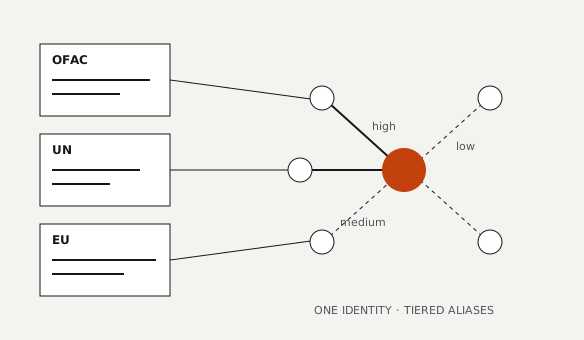
How the Sanctions resolver turns signals into one identity: a signal, a confidence score and an action. The method used is recorded on each match.
Anatomy of a release
An exploded view of what ships. The deliverable is a documented, versioned artefact, not a one-off file. Illustrative layout; contents vary by product.
A Labs engagement
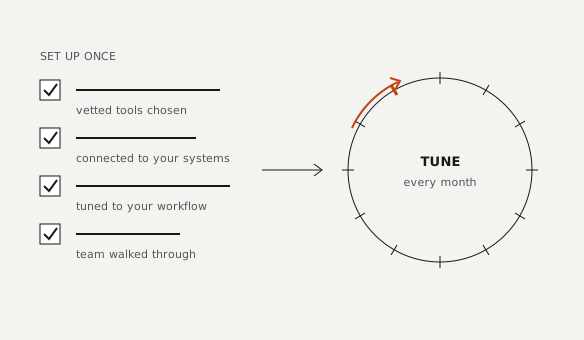
Each venture sets the agent up with its client and supports it on a monthly plan.
- 01Map one workflowThe calls, emails or charges that go wrong today, and what a good outcome looks like.
- 02Build it togetherApproved templates and the client's own systems of record.
- 03Go liveThe agent starts on the workflow for the client's own customers.
- 04Keep it tunedOngoing support and adjustment, on a monthly plan.
An agent in early access
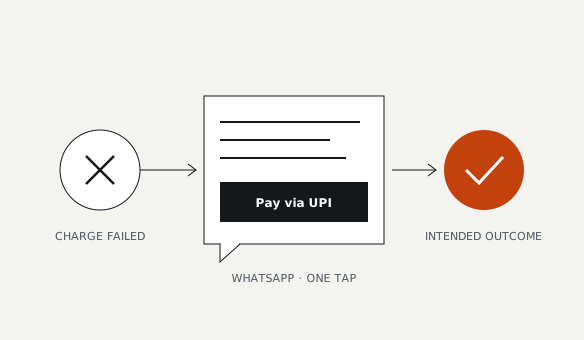
RecoverTrue is in early access. This schematic shows the intended flow: a failed charge, a WhatsApp message with a one-tap UPI link, and the recovered payment.
The method at work
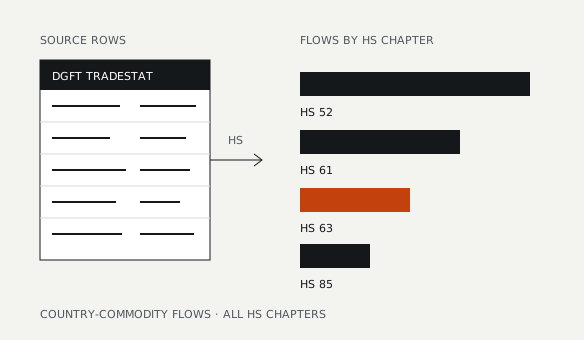
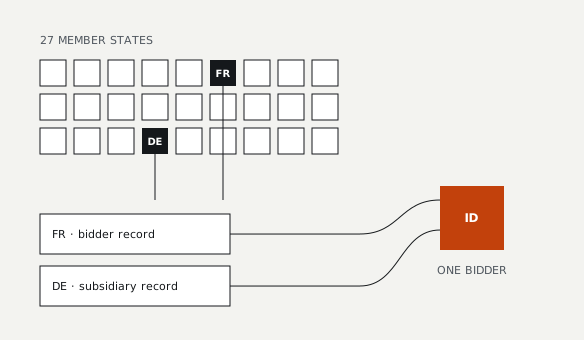
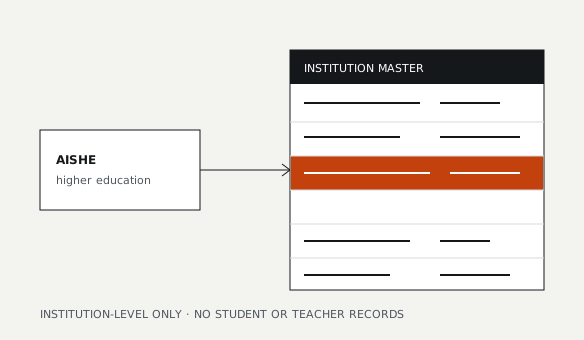
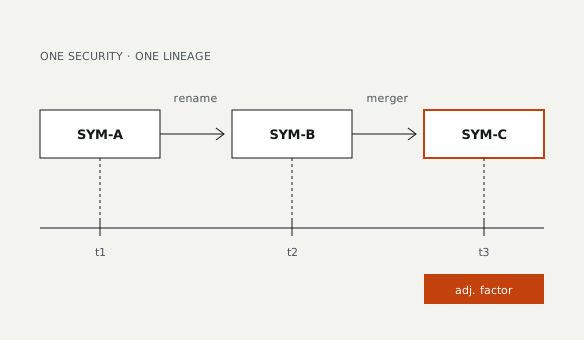
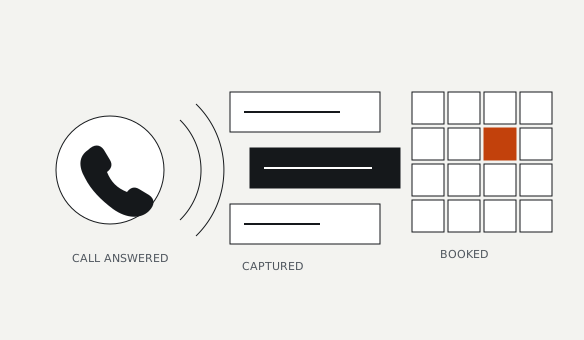
One schematic per product: what comes in, what TrueSignal does to it, and what comes out. Orange marks the outcome.
License a dataset, or bring us a workflow.
We license data through TrueSignal Data and take on a small number of implementation partners through Labs at a time.